Best time to visit Indore: A season-by-season guide to weather, festivals and food

From cool winter mornings at Rajwada to July weekends chasing Patalpani, here's when to plan your Indore trip, and what the city actually feels like once you're there.
By Shreya Chopra
03 Sep, 2026
A friend texted me in April asking if she should push her Indore trip to December. Another friend, that same week, was already deep into planning a July weekend built entirely around Patalpani.
Neither of them was wrong.
That's the honest answer to when you should visit Indore. It depends on what you're actually going for: walking Rajwada and the old city at a slow pace, chasing a waterfall, eating your way through Sarafa until you can't manage another plate, or just needing a comfortable base for a few workdays with pleasant evenings.
Indore doesn't really have a bad season. It has different seasons that suit different trips, and once you know what each one looks like, picking your dates gets a lot easier.
For most travellers, October to February is the best time to visit Indore. The weather is generally more comfortable for sightseeing, walking around the city and planning day trips. The rest of the year can work too, especially if you know what you're getting into.
This guide breaks the year down by season, then by month, so you can match the weather to whatever's actually on your itinerary.
Best time to visit Indore at a glance
| Season | Months | What to expect | Good for |
|---|---|---|---|
| Winter | November to February | Cool, mostly dry and comfortable for long days outside | First-time visitors, heritage walks, food trails, day trips |
| Early summer | March to April | Warmer days, with afternoons becoming increasingly hot | Short city breaks, early-morning sightseeing, evenings out |
| Peak summer | May to June | Hot days, with June moving towards the monsoon | Budget trips, slower itineraries, indoor sights |
| Monsoon | July to September | Frequent rain, greener surroundings and cooler temperatures | Patalpani, waterfalls, road trips and greenery |
| Post-monsoon | October | Rain begins to ease and the weather becomes more comfortable | City sightseeing and road trips |
Winter (November to February): the season most people actually mean
When someone asks about the best time to visit Indore, they're usually asking about winter without realising it.
Mornings are cooler, afternoons are comfortable, and the lack of rain makes it easy to spend a full day outside without constantly checking the sky.
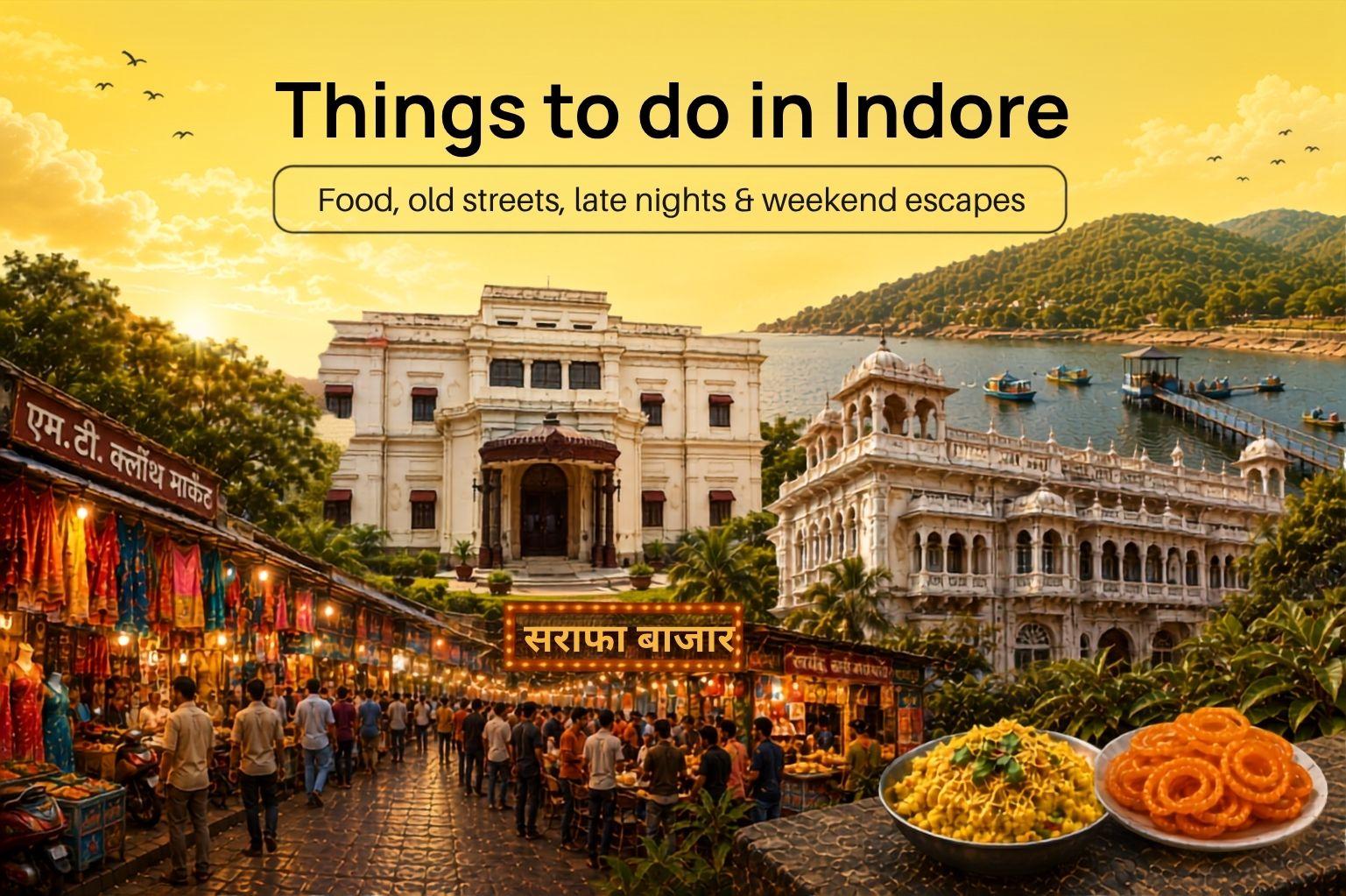
This is the season I'd pick for a first trip. You can take your time around Rajwada and the old city, visit Lal Bagh Palace, stop at Kanch Mandir, spend the afternoon exploring and still have enough energy left for a proper evening at Sarafa.
Winter is also the easiest season for day trips. If you're planning to add Ujjain, Mandu or Maheshwar to the itinerary, cooler weather makes those longer days on the road considerably easier.
January is generally the coolest part of the year, while November and February sit somewhere between winter and the warmer months. Carry a light jacket or sweater for mornings and evenings, especially if you're used to warmer coastal weather.
This is also the busier travel window, particularly around the festive and December-January period. If you're travelling on a fixed weekend, booking your stay and transport a little earlier is sensible.
Read next: Things to Do in Indore
Summer (March to June): not ideal, but not a dealbreaker either
Summer in Indore is genuinely hot. March is still manageable for most travellers, but temperatures rise quickly through April and May. By the peak of summer, afternoons can be uncomfortable for long walks and open-air sightseeing.
That doesn't mean the city shuts down. It just changes the way you explore it.
Start your day early, keep the hottest hours lighter, and save longer food and evening plans for later. A lot of what makes Indore worth visiting doesn't actually need midday heat anyway.
You can see Lal Bagh Palace or the Central Museum earlier in the day, take a slower afternoon, and head out again once the sun starts to soften. Sarafa and Chappan Dukan are evening destinations regardless of the season, so summer doesn't really get in the way there.
June is a little different because the monsoon starts making its way in. Rainfall begins to pick up, and temperatures start to ease, although the weather can still be unpredictable.
Monsoon (July to September): Indore's most underrated season
Monsoon rarely comes up when people ask about the best time to visit Indore, and that's a bit of a missed opportunity.
July and August are the wettest part of the year, but the reward is a greener, cooler-looking Indore and much more interesting drives around the city.
This is when places like Patalpani and the countryside around Choral start making a stronger case for themselves. Waterfalls become a reason to leave the city for half a day, and the landscape around the outskirts looks completely different from what you'd see in peak summer.
The trade-off is obvious: rain makes plans less predictable.
Waterfall visits depend on weather and local conditions, roads can get slippery, and a heavy shower can change an outdoor plan in an hour. Keep some flexibility in your itinerary and check the weather before heading out.
That's the main rule for a monsoon trip to Indore.
Our Things to Do in Indore guide has more on making the most of a monsoon visit, including Patalpani and Choral Dam.
Indore weather by month
| Month | What the weather is generally like | What it means for your trip |
|---|---|---|
| January | Cool and dry | Excellent for walking, sightseeing and day trips |
| February | Mild and mostly dry | Still a very comfortable time to visit |
| March | Warmer, but manageable | Good for short trips and festival travel |
| April | Hotter afternoons | Start early and keep afternoons lighter |
| May | Peak summer heat | Plan around mornings, evenings and indoor sights |
| June | Hot with increasing rain | Flexible plans work best |
| July | Wet and cooler | Great for monsoon greenery and waterfalls |
| August | Wet and green | Good for nature-focused trips if rain doesn't bother you |
| September | Rain begins to ease | A good compromise for a greener Indore |
| October | Post-monsoon transition | Weather starts becoming more comfortable again |
| November | Cooler and drier | One of the best months for exploring |
| December | Cool and dry | Excellent for first-time visitors and evening plans |
These are broad seasonal planning guidelines rather than a day-by-day forecast. Weather can vary from year to year, so check the forecast closer to your travel dates.
Time it around Rangpanchami, if you can
If your dates have any flexibility in March, look up Rangpanchami before you finalise them.
Celebrated five days after Holi, Rangpanchami is one of Indore's oldest traditions, dating back to the Holkar era, and the city genuinely turns itself inside out for it. Processions called Gers wind through the old city towards Rajwada, colour and water get sprayed from what are essentially purpose-built rigs, and the streets around Gorakund and Tori Corner fill with more people than you'll see there any other week of the year.
It's not a quiet sightseeing day. Roads close, the old city gets crowded, and if colour-soaked chaos isn't your idea of a good time, you may prefer to visit a week either side of it. But if it is, this is arguably the single most distinctive week to be in Indore.
The date shifts every year with the lunar calendar, so check it against your travel dates rather than assuming it'll fall on the same day as last year.
Best time to visit Indore for specific plans
If you're here for one day: aim for winter. A single day means no room for heat breaks or rain delays, so November to February gives you the most reliable stretch of usable hours.
If Sarafa and Chappan Dukan are the whole trip: honestly, any season works. Both come alive after dark regardless of what the daytime temperature was doing, though winter evenings make the wait for a table a lot more pleasant than a humid August night.
If you're planning a day trip to Ujjain, Mandu or Maheshwar: winter and early monsoon both work well. Summer heat makes a full day outdoors, especially around Mandu's spread-out ruins, considerably harder going.
For details on getting there, see our How to Reach Indore guide.
If you're on a workation: shoulder months like October and March give you a good middle ground: mild enough to enjoy the evenings, without the peak-season crowds or prices of December and January.
Whatever the season, Indore adjusts to it
Winter gives you the easiest version of Indore: cool mornings at Rajwada, comfortable evenings at Sarafa, and day trips that don't require quite so much planning around the weather.
Summer asks you to slow down a little. Start early, take the afternoon easy and come back out once the heat drops.
Monsoon changes the mood completely. The city gets greener, the roads outside Indore become more tempting, and suddenly a plan that was supposed to be dinner and bed can turn into a drive because the weather is too good to stay indoors.
That's also why having a good base makes a difference. The Hosteller Indore gives you a place to settle in while you explore the city at your own pace, whether you're here for a quick winter break, a monsoon escape or a few days of work in between.
So, for your first trip, November to February is the safest bet.
But don't rule out the rest of the year just because it isn't peak season. Sometimes the more interesting trip starts when you visit Indore in the version of the city that suits you.
FAQs







thehosteller